You Are the Hero of Your Writer’s Life Story

You Are the Hero of Your Writer’s Life Story. Stories give shape and form to life. Stories lend wholeness to your imperfect vision of your experience. Telling your writer’s life story will do all of that for you. The tale of your emotional writing journey deserves to be told – first to yourself.

Begin Your Writer’s Life Story. Get started now. Open a new document. Title it “My Writer’ s Life Story.” Write the first sentence. The rest will follow. We are each of us butterflies with a single wing until we become whole by embracing ourselves – and our stories.

A Powerful Story Begins with a Character We Care About. The character we care about in your writer’s life story is You. This is your personal writer’s narrative. Whatever your challenges may have been – in your writing life and beyond – you are the major reason you are still here and still creating today.

You Struggled to Hang On to Your Creativity. You battled to overcome your challenges. Sometimes you needed help. We all do. Sometimes you got the help you required. But mostly your champion was You. What does that mean? It means You Are the Hero of Your Writer’s Life Story.

Joy Write. What is the toughest challenge you ever faced as a writer? What was the worst part of it? When and where? Who was involved? What happened? How did it make you feel? Write it back to life in your writer’s journal. Emotions may arise. Keep on writing. Straight from your heart.

You May Not Think of Yourself as a Hero. You must change your mind about that. Upgrade your attitude. Tell your writer’s life story. The story with you at its center as your main character. You are the prime mover of your creative destiny.

You May Not Think of Yourself as Luminous. But you are the person in your life – especially your writer’s life – who kindled the spark that set your imagination on fire. That fire blazes still because You did not allow it to die. You are definitely your hero. And this is your heroic writer’s journey.

What Does It Mean to Say You Are Heroic? It means you persevere. Despite the difficulties of your writer’s life – and we all have them – you try your best to shield your creative spark from the storm. Those storms may overwhelm you at times. We all experience that.

What is Your Writer’s Struggle and Triumph Truth? You struggle to beat back the tempest. Sometimes you succeed. Sometimes not. But you keep on trying. You keep on feeding the flame. That is your triumph. Share snippets of your hero’s tale on social media. Use the hashtag #MyWritersStory.

You are a Human Hero Not a Superhero. You would just as soon let the struggles pass on by. But something must be done or your precious writer’s life could be lost. Your creative blaze could be extinguished. So – you respond to the challenge you face. You step up. You act. You employ as much strength as you can muster.

You Do the Best You Can in Your Circumstances. You defend your dream. There is emotional power in that. There is emotional power in writer’s stories. Whatever your outcome may be – You Are the Hero of Your Writer’s Life Story. Say it out loud and proud. Mean it with all your heart.

My Writer’s Life Story is Sometimes a Screwball Comedy. I am the screwball hero. Take for example the time I turned down one of the best literary agents in New York City. She offered to represent me and my entire psyche spun into panic mode. I longed to run away.
Even the Imagined Proximity of Success Terrified Me. “I’m not ready!” I told Ms. Super Agent this at a fancy lunch in a fancy midtown Manhattan restaurant. My sushi went warm while I floundered through a writing identity crisis. Too long later I realized what a fool I was. I had even paid for the lunch.

Yet – I am Still a Writer. Which often bewilders me. The only explanation I can come up with is the grace of God. I staggered from midtown that day to our stoop on West 50th Street and hunkered down there in defeat. Then – Suddenly…. Any anecdote worth telling must have a Suddenly moment.

Suddenly Something Wonderful Happened. He sprinkled grace over me and somehow it turned to resilience. The next morning I got up and continued writing. This is a writer’s redemption story. That next morning – after ignominious defeat – I became the hero of my writer’s life story.

Joy Write. Ignominious means deserving of or causing shame. Have you ever cringed through an embarrassing incident in your writer’s life? Share your story in the Comments section of this post or contact me at aliceorrbooks@gmail.com. Do not forget to include how this episode proves that You Are the Hero of Your Writer’s Life Story

You are the Prime Subject of Your Creative History. Virginia Woolf agrees. “Every secret of a writer’s mind, every experience of her life, every quality of her being, is written large in her heart.” Every experience of our storytelling life is written in your heart and mine and the heart of every writer.

Immortalize Those Scenes on the Page. Make them vivid. The secrets of your adventure in creativity are ready to be revealed. Stop seeing yourself as “just a writer.” You are the main character of an epic adventure. Write with that in mind. You Are the Hero of Your Writer’s Life Story.

Tell Your Writer’s Life Story is a Four-Part Series. This post is Part I – You Are the Hero of Your Writer’s Life Story. Part II – Explode Into Your Writer’s Life Story. Part III – Cast Your Writer’s Life Story. Part IV – Structure Your Writer’s Life Story. Stay Tuned.

FYI – More Joy Write Prompts for You as Hero of Your Writer’s Life Story.

  • Imagine you are being awarded a commendation for reaching this heroic moment of your writer’s life. Write the speech the presenter will give. Make clear that you deserve this award. Describe specifically how you earned it. Consider writing a short story that dramatizes this event. Feel free to fictionalize if you are inspired to do so.
  • The first Joy Write prompt in the above article was about the toughest challenge you have encountered in your writer’s life story. You persevered beyond that challenge. Tell your writer’s journal what you gained from that perseverance.
  • Recall a time when you turned a dark moment to light in your writer’s life. What was the nature of the darkness? How, specifically, did you bring light to the situation? Write an article that tells this inspiring story. Submit the article to an online writer’s publication or your local writer’s group newsletter. Your writer colleagues need to read such hopeful tales.
  • How does it feel to think of yourself as a hero in your writer’s life? Share those feelings with me in an email to aliceorrbooks@gmail.com. I would love to know about your emotional experience with adopting this empowered point of view. I look forward to hearing from you.
  • Share this post with a writer friend. Encourage her to think of herself as the hero of her writer’s life story. Document your conversation as an audio or video recording. Share that recording with your critique partners or another writers’ group.
  • What wisdom have you gained by recognizing yourself as the hero of your writer’s life story? Brainstorm ways to share that wisdom with other writers and creative people. Which option most appeals to you. Act on it. Email aliceorrbooks@gmail.com. Tell me what happens.

Keep on Writing whatever may occur. Alice Orr. https://www.aliceorrbooks.com

Alice Orr. Teacher. Storyteller. Former Editor and Literary Agent. Author of 15 novels, 2 novellas, a memoir, and No More Rejections: 50 Secrets to Writing a Manuscript that Sells.

Joy Write with Alice. https://www.aliceorrbooks.com.

Follow Alice on Substack — https://aliceorr.substack.com/.

Read Alice’s Novel. A Time of Fear & Loving. Riverton Road Romantic Suspense Series Book 5. Available HERE.
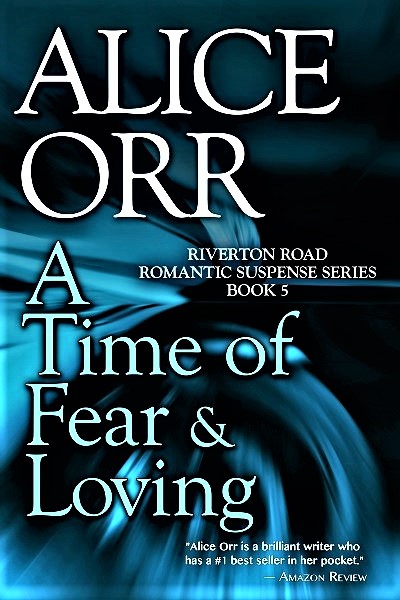
A Time of Fear & Loving

Praise for A Time of Fear & Loving. “Alice Orr is the queen of ramped-up stakes and page-turning suspense.” “Warning. Don’t read before bed. You won’t want to sleep.” “The tension in this novel is through the roof.” “I never want an Alice Orr book to end.” “Budding romance sizzles in the background until it ignites with passion.” “The best one yet!”

Experience Alice’s Suspense Novel Series. Riverton Road Romantic Suspense Series. Five intense stories of love and death and intrigue. Available HERE.
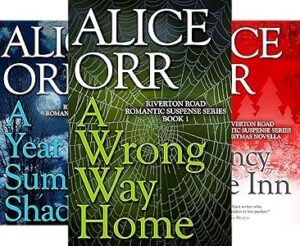
Praise for Riverton Road Romantic Suspense Series. “Romance and suspense at its best.” “I highly recommend this page-turner series.” “Twists and turns, strong characters, suspense and passionate love.” “The writing is exquisite.”

Ask Alice Your Crucial Questions. What are you most eager to know? About your writer experience. About telling your stories. Ask your question as a comment following this post.

http://facebook.com/aliceorrwriter/
http://twitter.com/AliceOrrBooks/

https://bsky.app/profile/aliceorr.bsky.social/
http://goodreads.com/aliceorr/
http://pinterest.com/aliceorrwriter/



What My Mentor Taught Me

What My Mentor Taught Me. The first thing my mentor taught me was to show up. Jean Rikhoff was my writing mentor. “Ninety percent of success is showing up,” she told me. Figure out how to do what needs to be done in your life to get where you want to go. Then show up and do it. Jean talked the talk. But when it came to creative discipline – she was a woman of action first and foremost.

My Mentor Taught Me to Walk the Walk. Jean was a young mother when she began her writing commitment. Home was too hectic to permit the writing consistency she required. So she drove to a local supermarket parking lot very early every morning and wrote her first novel there.

My Mentor Taught Me to Figure Out What I Need. Jean showed up. She did what had to be done – for herself and her dream. Do the same for yourself. What is the biggest challenge that keeps you from showing up for your writing? Share this post with a writer or creative person who needs to hear about the power of showing up consistently for their work.

Joy Write. Who was your first writing mentor? The person who most inspired and encouraged you early in your creativity life. What did they teach you? What was the best piece of advice they ever gave you?

My Mentor Taught Me to Write Regularly. What does it take to show up for your writing every day? Create a writing routine that works. Adopt strong writing habits. No matter what else is going on in your life – develop a writer’s discipline. One page or one hour a day minimum. That was Jean’s rule. Make it yours.

My Mentor Taught Me about My Need to Write. Train your writer psyche to feel out of balance without a daily dose of writing routine. One page or one hour minimum. Make creativity a positive addiction. Set yourself up to crave another dose. Schedule writing time on your calendar for the next week. Make that schedule a vow to your writer self.

My Mentor Taught Me to Mark My Territory. How do you set up your very own writing space at home? Carve out a place for yourself. A writer’s workspace for your writing practice. Virginia Woolf advocated “a room of your own.” Crowded or chaotic circumstances may preclude that – like they did for my mentor. What My Mentor Taught Me.

My Mentor Taught Me that Any Space can be My Territory. Jean wrote her novel in the front seat of a car. Any private corner can suffice.  Gather your precious writing tools. Notebooks. Laptop. Files. Pens. Give them a home in your writer’s workspace. A home for whatever you require to pursue your dream. Write in that home space every day.

Joy Write. Describe your ideal writing and creative space? Have you created that place for yourself yet? If not, why not. Write it into detailed existence on the page.

My Mentor Taught Me to Get Good Gear. What writing equipment do you need? Prepare yourself well to pursue your writer motivation. Buy quality equipment. Cut back spending on other things when necessary. Do you have qualms about doing that? Leave those doubts behind. 

My Mentor Taught Me this Mantra. You deserve what you need to succeed. Make this your mantra from this moment on. Believe every word with all your heart. Repeat it often and enthusiastically. Pledge yourself to show up for yourself. Commit to honoring that vow. List your writing gear essentials. Acquire them asap.

My Mentor Taught Me to Value My Time. How do you find time to work within your busy schedule? Practice writing time management. Control your commitments. Ask yourself. “Can someone else do this? Does it have to be me? Examine carefully each new request for your valuable time and already overtaxed energy.

My Mentor Taught Me My Creative Work is Crucial. When someone or something asks for your time and energy – ask yourself the following in return. “Will this be the best use of my precious life?” Show up for yourself by prioritizing yourself. Your creative work is crucial. Make time to create. Protect your writing time.

Joy Write. Make a list of your current commitments. Choose one that somebody else could do well enough. Write a scene of yourself backing away from that commitment.

My Mentor Taught Me to Train My Tribe. How do you begin to command respect from others for your writing time? Post your writing work hours. The refrigerator door is a good place in most households. Insist on no interruptions at those times. Tell family and friends how important your writing is to you.

My Mentor Taught Me to Be Open About My Dream. Reveal your creative desires to the people in your life. They may not understand. Make them hear you. Do not back down. They will come around. If they do not – keep on writing whatever may occur. Continue your creative work. Show up and stand up for what you need. Pursue your dream. What My Mentor Taught Me.

My Mentor Taught Me to Train Myself. How do you begin to command respect for your writing time from yourself? Identify your personal time-burners. These activities contribute little to what you really want to accomplish in your creative life. Never ever indulge these activities during your best brain time. You can do better.

My Mentor Taught Me to Use My Online Time Wisely. Limit online play to your dim-bulb hours. Social media activities do not require your best creative abilities. But – you can optimize your online time all the same. Use it to build your public platform visibility. Use it to share your writing work with the world.

Joy Write. What are your peak creativity hours of the day? Write about them, especially what your energy feels like during those times.

My Mentor Taught Me to Show Up for My Story. What will carry you deeper into your writing and keep you there? John Gardner called that deep-down center of your story “the dream of the book.” The true joy of writing happens when you enter that dream and inhabit it completely.

My Mentor Taught Me to Show Up for My Imagination. Move beneath the surface of your busy mind. Dive into the mysterious and mesmerizing depths of your imagination. Your very best stories await you there. This is the place where the burning heart of your story resides. Go there. Write from there. What My Mentor Taught Me.

My Mentor Taught Me to Show Up for Myself. Life stress can stop you in your tracks. Life stress can kill creativity. Give yourself a break. Give your story a boost. Utilize your stress. That stress is intense. Powerful stories are also intense. Transport your personal stress intensity into your writing work. Feel it. Adapt it. You are the creator. Create.

Joy Write. How do you manage to write regularly no matter what? Write about a current stressor in your life. Transform that reality into a stressful situation for a fictional character, maybe from a story you are now writing. Bring it to life on the page as an intense, dramatic, powerful scene.

My Mentor Taught Me to Show Up for My Writing Tribe. Build a writing tribe that supports you. Support that tribe yourself. Embrace your writer family. Help your writer colleagues. Look around your writing community. You will know where you are needed and by whom. You feel it. Somebody is down. Show up. Lift them up. Let your generosity shine.

Joy Write. Write a dialogue between yourself and your wise mentor, whether that is a real person or one you create for this exercise. What do you most need to hear right now?

My Mentor Taught Me to Be My Own Mentor. Figure out how to make your writing happen. Show up where your creativity needs you to be. My mentors made their creativity happen. Be inspired to do the same. You have what you need. Show up and use it all for your creative self. Become your own mentor in your writer’s life story.

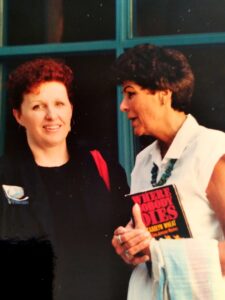
My Mentor Became My Friend. The photo is Jean and me at a writer’s conference long after our relationship began. By then I was a published author, workshop leader and literary agent. She was the wise woman she had always been. Her wisdom brightened my beginnings and lit my path. I am forever grateful for What My Mentor Taught Me.

FYI – Writing Prompts Your Mentor Self Would Like You to Follow.

  1. Someone in your life who was not a writer taught you something crucial about discipline and persistence that has positively influenced your creativity. Tell your writer’s journal about this person and what they did for you. Share your own mentor story as a Comment on this post.
  2. Commit to writing a minimum of one page daily for a week. At the end of the week, reflect in your writer’s journal about how this practice affected your relationship with writing.
  3. In your writer’s journal, list all of the reasons you use for not writing. Rewrite each excuse as a problem to solve and propose a way to solve it.
  4. Track how you spend one day. Ferret out where writing time was hiding in that day, even if it was only a brief period. Record the results in your writer’s journal.
  5. Identify what is at the burning heart of a story you are writing, or a story you want to write. Describe that emotional core in vivid detail in your writer’s journal.
  6. What is your favorite writing tool? A pen or your laptop or a notebook or whatever. Write about why this particular thing means so much to you. How does it help you and encourage you to create.
  7. Make a list of other writers in your life who have lifted you up when you were down or when you were discouraged about your writing. What do you remember most about each of those experiences?
  8. Make a list of other writers in your life whom you have lifted up when they were down or discouraged about their writing. What did you give to each of them? What did you receive in return?
  9. At the end of every week, note in your writer’s journal how you showed up for yourself during the past seven days. Congratulate yourself for doing so.
  10. Remember who you were as a writer before you learned that you should show up for yourself. In your writer’s journal, compare that former you with your current writer self.

Keep on Writing whatever may occur. Alice Orr. https://www.aliceorrbooks.com

Alice Orr. Teacher. Storyteller. Former Editor and Literary Agent. Author of 15 novels, 2 novellas, a memoir, and No More Rejections: 50 Secrets to Writing a Manuscript that Sells.

Joy Write with Alice. https://www.aliceorrbooks.com.

Follow Alice on Substack https://aliceorr.substack.com/

Read Alice’s Novel. A Time of Fear & Loving. Riverton Road Romantic Suspense Series Book 5. Available HERE.

A Time of Fear & Loving

Praise for A Time of Fear & Loving. “Alice Orr is the queen of ramped-up stakes and page-turning suspense.” “Warning. Don’t read before bed. You won’t want to sleep.” “The tension in this novel is through the roof.” “I never want an Alice Orr book to end.” “Budding romance sizzles in the background until it ignites with passion.” “The best one yet!”

Experience Alice’s Suspense Novel Series. Riverton Road Romantic Suspense Series. Five intense stories of love and death and intrigue. Available HERE.

Praise for Riverton Road Romantic Suspense Series. “Romance and suspense at its best.” “I highly recommend this page-turner series.” “Twists and turns, strong characters, suspense and passionate love.” “The writing is exquisite.”

Ask Alice Your Crucial Questions. What are you most eager to know? About your writer experience. About telling your stories. Ask your question as a comment following this post.

http://facebook.com/aliceorrwriter/
http://twitter.com/AliceOrrBooks/

https://bsky.app/profile/aliceorr.bsky.social/
http://goodreads.com/aliceorr/
http://pinterest.com/aliceorrwriter/


Write It Right About Anger – Joy Writing with Alice Orr

Write It Right About Anger – Joy Writing with Alice Orr. Anger is a tricky topic for many people. Anger is a tricky emotion. Writing anger is tricky too. Sometimes damned if you do. Sometimes damned if you don’t. Let’s face off about anger.

When Mornings Start with Emotion. Some days I wake up feeling Anger. I may not remember exactly why. I do remember how it feels to carry that state of mind inside me and may want to erase it immediately. But there are other considerations to consider. Especially for a writer.

Ann Lamott on the Value of Anger. In Grace (Eventually) Ann Lamott says. “It’s fine to know but not to say that anger is good. A bad attitude is excellent and the medicinal powers of shouting and complaining cannot be underestimated.”

The Value of Anger for a Writer. Ann Lamott gets it right – especially the part about it not being fine to express anger. She encourages Writing About Anger. So do I. Not everyone agrees. Not everyone makes it comfortable for the rest of us to agree.

Why We Hide Our Anger. When we are hurting our natural anger is often squelched. Our emotional discomfort meets with disapproval from those around us. Their disapproval admonishes us for Expressing Anger – even in our writing.

The Pressure to Stay Positive. Injured individuals are told they must be upbeat and hopeful at all times. They are told they invite trouble and bad outcomes by allowing their anxiety to show. This kind of repression causes more Emotional Discomfort – including for the characters we create.

Permission to Feel is Legitimately Positive. We must let ourselves and others feel whatever we need to feel. Which sometimes includes a dose of being pissed off. Embracing all emotions is key to embracing emotional health and embodying a healthy brain.

Harness Your Disgruntled Energy. Sometimes an outburst of pissed off energy is exactly the fuel that is needed to get you and your characters through a prickly patch or a bad day. You are Coping with Anger in Difficult Times by putting it to productive use of your own time.

Joy Write. Write about a situation where anger gave you the energy or motivation to get through a difficult experience. What were you able to accomplish with the help of that anger energy?

The Virtues of Positivity are Endlessly Espoused. Cliches abound. Keep your sunny side up. Look for the silver lining. Whistle a happy tune. We all spout versions of them. In my Workshops for Writers I say “Attitude isn’t everything but it affects everything.” Less rainbow-tinted wording but still basically “sunny side” “silver lining” “happy tune.”

Positivity versus Authenticity. Attitude may affect everything. But what about when your smile is a lie? What about when you shine your smile because others like your face better that way? What about when you smile because you feel you have to? Write It Right About Anger – Joy Writing with Alice Orr.

Joy Write. Recall a time when you felt pressured to hide your anger or “keep your sunny side up.” How did that affect you? Did you comply or rebel. Tell the story.

The Challenge of Maintaining Cheerfulness. Anger can gain its own momentum and feed itself. Cheerfulness is harder. You wake up in a good mood that drifts away. You try to keep it going but the effort is too difficult to sustain. Sometimes we sulk however that may be received. We choose between Emotional Discomfort and Disapproval.

Joy Write. Write about a morning when you woke up angry for no clear reason. How did that feeling shape your day? What did you notice about yourself and your interactions with other people? How did they react to your disgruntled self?

Facing Life’s Challenges and Challengers. Somebody says “Let me be perfectly honest with you.” My advice? Head for the hills. I wager they have not brought welcome news. Do not stop running until you are a far distance from unwelcome unsolicited challenges. How properly polite we are to call such presumption a “challenge” in the first place.

Writing as Release. A compensating truth. We are writers. We let it all hang out on the page – including our journal pages. We tell our stories however angry or disgruntled or prickly they may be. We are Expressing Anger in Writing. We are Writing Truthfully about Emotions.

Joy Write. Consider how language shapes our experience. How words like “challenged” and “upset” dilute the true intensity of feeling angry. Write an emotional scene using vivid, technicolor language to recreate the anger your character feels.

A Truth about Our Current World. Life has become a slog for many folks for many reasons. Pretending otherwise disrespects all of us who Live with the Anger. We dance with the devil. We struggle to keep in step. Are you Letting Yourself Feel Anger?

Choose What to Do with Your Truth. Tell your Truth in Writing. Publish your truth tales. Or hide them behind a toilet bowl. Or save that choice for another day. Do not be angry with yourself for your anger. Do not forget that there is Hope After Anger.

The Shifting Circle of Support. Anger and Relationships. Some support may drift away. They may need to nurse their own anger. They may need to rest from anger fatigue. Others will remain stolidly in place. There is hope in that. There is strength in that.

Joy Write. Reflect on the people who have stayed with you through the tough, angry times in your life. Make a list of those people. Choose one and write the story of that person’s support and loyalty to you.

Find Hope in Your Honesty. No matter what – you are still here and you are still you. There is hope in that. There is triumph in that. Keep on Writing Your Truth whatever may occur. Write It Right About Anger – Joy Writing with Alice Orr.

FYI – More Writing Prompts and Exercises that Write It Right About Anger.

  1. List the physical sensations, thoughts and behaviors a person experiences when angry. Write a paragraph using these details in the behavior of a fictional character. Write a paragraph using these details for your own behavior in a memoir piece.
  2. Choose a cliché about positivity (e.g. look for the silver lining). Rewrite it from the perspective and attitude of someone who is experiencing a moment or a period of anger. How do the phrase and its meaning change?
  3. Write a conversation between two characters. One is angry. The other insists on remaining positive. Let the tension between them play out in their dialogue.
  4. Set a timer for ten minutes. Write nonstop about a time you felt that your anger was not allowed or was being dismissed as inappropriate or irrelevant. Do not edit or judge. Just let the words come and write them down.
  5. Write two sentences. In one sentence a character tries to suppress their anger. In the other sentence the same character openly expresses their anger. Compare and contrast the two sentences.
  6. Describe anger using metaphors and/or similes. A metaphor example – Anger is a storm brewing behind my eyes. A simile example – Anger is like a storm brewing behind my eyes. Let your imagination fly. Do not judge or edit. Just write.
  7. Write a letter you will never send to someone or something that made you angry at some time in your life. Let the feelings flow. Do not censor your emotions.
  8. Start a Writing Habit. Set aside ten minutes a day to write about whatever emotion is strongest for you at the time – anger or hope or anything in between.

Keep on Writing whatever may occur. Alice Orr https://www.aliceorrbooks.com and https://aliceorr.substack.com/p/write-it-right-about-anger 

Alice Orr. Teacher. Storyteller. Former Editor and Literary Agent. Author of 15 novels, 2 novellas, a memoir, and No More Rejections: 50 Secrets to Writing a Manuscript that Sells.

Joy Write with Alice. https:://www.aliceorrbooks.com.

Follow Alice on Substack https://aliceorr.substack.com/

Read Alice’s Novel. She writes it right about anger in A Time of Fear & Loving. Riverton Road Romantic Suspense Series Book 5. Available HERE.

A Time of Fear & Loving

Praise for A Time of Fear & Loving. “Alice Orr is the queen of ramped-up stakes and page-turning suspense.” “Warning. Don’t read before bed. You won’t want to sleep.” “The tension in this novel is through the roof.” “I never want an Alice Orr book to end.” “Budding romance sizzles in the background until it ignites with passion.” “The best one yet!”

Experience Alice’s Suspense Novel Series. Riverton Road Romantic Suspense Series. Five intense stories of love and death and intrigue. Available HERE.

Praise for Riverton Road Romantic Suspense Series. “Romance and suspense at its best.” “I highly recommend this page-turner series.” “Twists and turns, strong characters, suspense and passionate love.” “The writing is exquisite.”

Ask Alice Your Crucial Questions. What are you most eager to know? About your writer experience. About telling your stories. Ask your question as a comment following this post.

http://facebook.com/aliceorrwriter/
http://twitter.com/AliceOrrBooks/

https://bsky.app/profile/aliceorr.bsky.social/
http://goodreads.com/aliceorr/
http://pinterest.com/aliceorrwriter/