Category Archives: Writing Career Wisdom

What My Mentor Taught Me

What My Mentor Taught Me. The first thing my mentor taught me was to show up. Jean Rikhoff was my writing mentor. “Ninety percent of success is showing up,” she told me. Figure out how to do what needs to be done in your life to get where you want to go. Then show up and do it. Jean talked the talk. But when it came to creative discipline – she was a woman of action first and foremost.
My Mentor Taught Me to Walk the Walk. Jean was a young mother when she began her writing commitment. Home was too hectic to permit the writing consistency she required. So she drove to a local supermarket parking lot very early every morning and wrote her first novel there.

My Mentor Taught Me to Figure Out What I Need. Jean showed up. She did what had to be done – for herself and her dream. Do the same for yourself. What is the biggest challenge that keeps you from showing up for your writing? Share this post with a writer or creative person who needs to hear about the power of showing up consistently for their work.

Joy Write. Who was your first writing mentor? The person who most inspired and encouraged you early in your creativity life. What did they teach you? What was the best piece of advice they ever gave you?

My Mentor Taught Me to Write Regularly. What does it take to show up for your writing every day? Create a writing routine that works. Adopt strong writing habits. No matter what else is going on in your life – develop a writer’s discipline. One page or one hour a day minimum. That was Jean’s rule. Make it yours.

My Mentor Taught Me about My Need to Write. Train your writer psyche to feel out of balance without a daily dose of writing routine. One page or one hour minimum. Make creativity a positive addiction. Set yourself up to crave another dose. Schedule writing time on your calendar for the next week. Make that schedule a vow to your writer self.

My Mentor Taught Me to Mark My Territory. How do you set up your very own writing space at home? Carve out a place for yourself. A writer’s workspace for your writing practice. Virginia Woolf advocated “a room of your own.” Crowded or chaotic circumstances may preclude that – like they did for my mentor. What My Mentor Taught Me.

My Mentor Taught Me that Any Space can be My Territory. Jean wrote her novel in the front seat of a car. Any private corner can suffice.  Gather your precious writing tools. Notebooks. Laptop. Files. Pens. Give them a home in your writer’s workspace. A home for whatever you require to pursue your dream. Write in that home space every day.

Joy Write. Describe your ideal writing and creative space? Have you created that place for yourself yet? If not, why not. Write it into detailed existence on the page.

My Mentor Taught Me to Get Good Gear. What writing equipment do you need? Prepare yourself well to pursue your writer motivation. Buy quality equipment. Cut back spending on other things when necessary. Do you have qualms about doing that? Leave those doubts behind. 

My Mentor Taught Me this Mantra. You deserve what you need to succeed. Make this your mantra from this moment on. Believe every word with all your heart. Repeat it often and enthusiastically. Pledge yourself to show up for yourself. Commit to honoring that vow. List your writing gear essentials. Acquire them asap.

My Mentor Taught Me to Value My Time. How do you find time to work within your busy schedule? Practice writing time management. Control your commitments. Ask yourself. “Can someone else do this? Does it have to be me? Examine carefully each new request for your valuable time and already overtaxed energy.

My Mentor Taught Me My Creative Work is Crucial. When someone or something asks for your time and energy – ask yourself the following in return. “Will this be the best use of my precious life?” Show up for yourself by prioritizing yourself. Your creative work is crucial. Make time to create. Protect your writing time.

Joy Write. Make a list of your current commitments. Choose one that somebody else could do well enough. Write a scene of yourself backing away from that commitment.

My Mentor Taught Me to Train My Tribe. How do you begin to command respect from others for your writing time? Post your writing work hours. The refrigerator door is a good place in most households. Insist on no interruptions at those times. Tell family and friends how important your writing is to you.

My Mentor Taught Me to Be Open About My Dream. Reveal your creative desires to the people in your life. They may not understand. Make them hear you. Do not back down. They will come around. If they do not – keep on writing whatever may occur. Continue your creative work. Show up and stand up for what you need. Pursue your dream. What My Mentor Taught Me.

My Mentor Taught Me to Train Myself. How do you begin to command respect for your writing time from yourself? Identify your personal time-burners. These activities contribute little to what you really want to accomplish in your creative life. Never ever indulge these activities during your best brain time. You can do better.

My Mentor Taught Me to Use My Online Time Wisely. Limit online play to your dim-bulb hours. Social media activities do not require your best creative abilities. But – you can optimize your online time all the same. Use it to build your public platform visibility. Use it to share your writing work with the world.

Joy Write. What are your peak creativity hours of the day? Write about them, especially what your energy feels like during those times.

My Mentor Taught Me to Show Up for My Story. What will carry you deeper into your writing and keep you there? John Gardner called that deep-down center of your story “the dream of the book.” The true joy of writing happens when you enter that dream and inhabit it completely.

My Mentor Taught Me to Show Up for My Imagination. Move beneath the surface of your busy mind. Dive into the mysterious and mesmerizing depths of your imagination. Your very best stories await you there. This is the place where the burning heart of your story resides. Go there. Write from there. What My Mentor Taught Me.

My Mentor Taught Me to Show Up for Myself. Life stress can stop you in your tracks. Life stress can kill creativity. Give yourself a break. Give your story a boost. Utilize your stress. That stress is intense. Powerful stories are also intense. Transport your personal stress intensity into your writing work. Feel it. Adapt it. You are the creator. Create.

Joy Write. How do you manage to write regularly no matter what? Write about a current stressor in your life. Transform that reality into a stressful situation for a fictional character, maybe from a story you are now writing. Bring it to life on the page as an intense, dramatic, powerful scene.

My Mentor Taught Me to Show Up for My Writing Tribe. Build a writing tribe that supports you. Support that tribe yourself. Embrace your writer family. Help your writer colleagues. Look around your writing community. You will know where you are needed and by whom. You feel it. Somebody is down. Show up. Lift them up. Let your generosity shine.

Joy Write. Write a dialogue between yourself and your wise mentor, whether that is a real person or one you create for this exercise. What do you most need to hear right now?

My Mentor Taught Me to Be My Own Mentor. Figure out how to make your writing happen. Show up where your creativity needs you to be. My mentors made their creativity happen. Be inspired to do the same. You have what you need. Show up and use it all for your creative self. Become your own mentor in your writer’s life story.

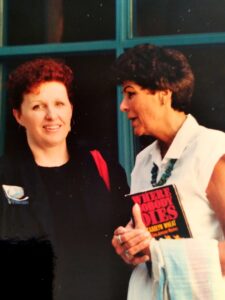
My Mentor Became My Friend. The photo is Jean and me at a writer’s conference long after our relationship began. By then I was a published author, workshop leader and literary agent. She was the wise woman she had always been. Her wisdom brightened my beginnings and lit my path. I am forever grateful for What My Mentor Taught Me.

FYI – Writing Prompts Your Mentor Self Would Like You to Follow.

  1. Someone in your life who was not a writer taught you something crucial about discipline and persistence that has positively influenced your creativity. Tell your writer’s journal about this person and what they did for you. Share your own mentor story as a Comment on this post.
  2. Commit to writing a minimum of one page daily for a week. At the end of the week, reflect in your writer’s journal about how this practice affected your relationship with writing.
  3. In your writer’s journal, list all of the reasons you use for not writing. Rewrite each excuse as a problem to solve and propose a way to solve it.
  4. Track how you spend one day. Ferret out where writing time was hiding in that day, even if it was only a brief period. Record the results in your writer’s journal.
  5. Identify what is at the burning heart of a story you are writing, or a story you want to write. Describe that emotional core in vivid detail in your writer’s journal.
  6. What is your favorite writing tool? A pen or your laptop or a notebook or whatever. Write about why this particular thing means so much to you. How does it help you and encourage you to create.
  7. Make a list of other writers in your life who have lifted you up when you were down or when you were discouraged about your writing. What do you remember most about each of those experiences?
  8. Make a list of other writers in your life whom you have lifted up when they were down or discouraged about their writing. What did you give to each of them? What did you receive in return?
  9. At the end of every week, note in your writer’s journal how you showed up for yourself during the past seven days. Congratulate yourself for doing so.
  10. Remember who you were as a writer before you learned that you should show up for yourself. In your writer’s journal, compare that former you with your current writer self.

Keep on Writing whatever may occur. Alice Orr. https://www.aliceorrbooks.com

Alice Orr. Teacher. Storyteller. Former Editor and Literary Agent. Author of 15 novels, 2 novellas, a memoir, and No More Rejections: 50 Secrets to Writing a Manuscript that Sells.

Joy Write with Alice. https://www.aliceorrbooks.com.

Follow Alice on Substack https://aliceorr.substack.com/

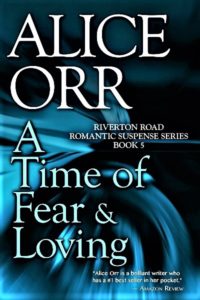
Read Alice’s Novel. A Time of Fear & Loving. Riverton Road Romantic Suspense Series Book 5. Available HERE.
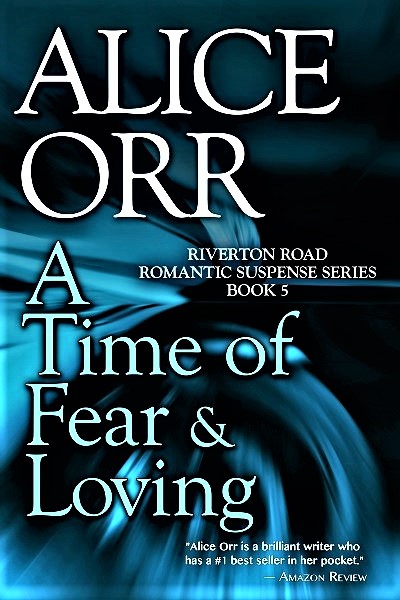
A Time of Fear & Loving

Praise for A Time of Fear & Loving. “Alice Orr is the queen of ramped-up stakes and page-turning suspense.” “Warning. Don’t read before bed. You won’t want to sleep.” “The tension in this novel is through the roof.” “I never want an Alice Orr book to end.” “Budding romance sizzles in the background until it ignites with passion.” “The best one yet!”

Experience Alice’s Suspense Novel Series. Riverton Road Romantic Suspense Series. Five intense stories of love and death and intrigue. Available HERE.
Praise for Riverton Road Romantic Suspense Series. “Romance and suspense at its best.” “I highly recommend this page-turner series.” “Twists and turns, strong characters, suspense and passionate love.” “The writing is exquisite.”

Ask Alice Your Crucial Questions. What are you most eager to know? About your writer experience. About telling your stories. Ask your question as a comment following this post.

http://facebook.com/aliceorrwriter/
http://twitter.com/AliceOrrBooks/

https://bsky.app/profile/aliceorr.bsky.social/
http://goodreads.com/aliceorr/
http://pinterest.com/aliceorrwriter/


Lifelong Creativity – Never Too Late to Write

Lifelong Creativity – Never Too Late to Write. Martin Scorsese thinks he may be running out of time. “I’m old. I want to tell stories. There’s no more time,” he says in a FanWire interview. Joy Writing with Alice Orr.

Even Master Storytellers Face Creative Fears. Lifelong creativity is something we can all achieve. But even Martin Scorsese dreads the challenge of time and creativity. He worries about Idea Block the same way you do. The same way I do. We can overcome that. We can Overcome idea block and Writer’s Block.

 Why Your Writing Journey Never Has to End. Lifelong creativity is your goal. You want your Writing Journey to go on forever. Longevity is one of your Writing Challenges. Martin Scorsese is right in one respect. No one lives forever. Time is limited. But there is another consideration.

Your Creative Well Never Truly Runs Dry. Imagination is not limited. The light of Artistic Expression burns bright within you always. If you do not believe that – it is Time for a Change of thinking. It is time to think about Creativity at Any Age and Any Stage of Life.

We All Require Encouragement. It is always a good moment for a hopeful change of mind. For you. For me. For all of us. Imagine that you have just met a writer who is discouraged about lifelong creativity. What hopeful story from your own life do you share?

Joy Write. You dropped a writing project once – dropped it for so long you thought it was too late to pick it up again. Then you did pick it up again. What changed your mind? What brought you back to the page? Write the story of that rebirth in your Writer’s Journal.

John Cassavetes on Lifelong Creativity. Another brilliant filmmaker said this. “No matter how old you are, if you keep the desire to be creative, you are keeping the child alive.” John Cassavetes was talking about the Importance of Resilience in Writing.

How to Reignite Your Creative Fire. You may fall off the Motivated to Write path for a while. We all tumble from the crown of the road occasionally. Then we climb back on. Fall Down Seven Times. Get Up Eight. Make this your mantra. Recover your desire to be creative.

Joy Write. A certain quote inspires you to keep writing. You write it down. You post it in your work space. Recall a time when those words inspired you. Share that story with other writers and with us in the Comments section following this post.

Persuade Yourself to Persevere. Take yourself back to the most discouraging period in your writer’s life. If you could write a letter to yourself back then – what would you say? Please allow me to suggest this admonition. Never Stop Writing.

Finding Strength in the Gaps Between Projects. “Are you still writing?” Julia Cameron – author of It’s Never Too Late to Begin Again – gets that question often. “The truth is, I cannot imagine not writing,” she says. “I go from project to project, always frightened by the gap in between.”

Julia Cameron on Beginning Again. Do what she does. She fills the gaps between writing projects with more writing projects. You do the same. Here is what to do when you hit a slump. Find Your Voice again. Begin writing again. Begin Storytelling again. Never Stop writing.

What to Do When Inspiration Feels Lost. You need to get creative and stay creative. You fear the fallow times. This is the remedy for every dry spell you will inevitably encounter. You believe your well of motivation has emptied forever. You cry out “Oh no! What will I do now?” Remain creative anyway. Never Stop writing.

Joy Write. You have experienced this emptied out feeling. No new writing idea was in mind or sight. What did you do to refill your creative well? Tell your Writer’s Journal.

Overcoming Fear. You must overcome fear before fear overcomes you. When you are terrified that your well of creativity may never fill up again you are facing another big Writing Challenge – Fear. What do you do? Go back to the page. Never Stop writing.

We All Experience Creative Fear. You have suffered creative fear in the past. You got through it. What writing fear is most real to you right now? Running out of ideas? Losing your voice? Something else entirely? You will overcome this fear too.

Get Back to Your Writing Practice. You have many New Novels in you – many new stories. Let your imagination fly. Dive in. Make it a deep dive. Plunge into whatever you find there. You are a writer. Writing is a living part of you. You will not lose that. Go back to the page.

Joy Write. You have taken a break from writing at one time or other. Why did you take that break? What brought you back to writing? Write that story – especially the story of your feelings while it was happening.

Writing as Life. Write like your life depends on it because it does. Your writer’s life depends on it. Writing is your access to your fullest life. When you are faced with Overcoming Creativity Challenges – always remember this. You are Joy Writing with Alice Orr. Lifelong Creativity – Never Too Late to Write.

My Journey Back from Creative Silence. This is what happened to me. I published my last New Novel several years ago. A few months later I suffered a heart attack and underwent open heart surgery. Lots of distractions occurred after that. After that I stopped writing novels.

When Fear Threatened to Steal My Voice. Do you remember what I already said about overcoming fear? I hope I did not disregard its difficulty. After my heart attack episode I was afraid my writing mojo had deserted me. Franklin Delano Roosevelt said we have everything to fear from fear itself. I discovered how right he was.

Joy Write. You have suffered self-doubt and fear about your creativity. What caused that to happen? Write about how you overcame doubt and fear and returned to your writing life.

The Value of Hitting Your Wall. I was afraid I could no longer focus sufficiently to build a book. I was afraid I could no longer create the kind of characters that populate and propel a powerful plot. I was afraid I was no longer a Storyteller. I hit my personal confidence wall. That collision was my come-back signal.

Remembering What You Have Already Struggled Through. I had forgotten I was a heart attack survivor. I had forgotten the peril I struggled through. I was blessed to be alive. I should no longer be afraid of anything. I had forgotten what a powerful story that was and still is.

Joy Write. You have experienced difficult times in your personal life that impacted your writing. Remember the worst of those times. How did you nurture your creativity and keep it alive during that period? Tell your Writer’s Journal your moving story.

The Secret Power of Small Creative Acts. I hit my wall and stopped writing fiction. But through the years that followed I picked away at story possibilities. I filled many five-by-eight-inch cards. I took volumes of notes. I annotated articles about everything from everywhere.

Your Creative Journey Happens One Step at a Time. Think of a single small creative act you can commit yourself to this week. Don’t wait for an explosion of inspiration. All you need is a spark. Light it up one page at a time. That is all it takes to make Joy Writing your life.

Persisting on the Page. I scribbled unsatisfying pages. I knew they were unsatisfying. I also knew I had to save my writing life. The secret that saved me was writing things down. It will save you too. Never stop writing something – anything. Get back to the page.

The Power of a New Beginning. I began a new novel. The first book in a new Romantic Suspense Series. I shuffled the notecards. I added to the notebooks. I reread the articles. I stared into space and lost myself in imagining. I wrote satisfying pages. I was Joy Writing again.

Joy Write. You once started something new and unexpected. What surprised you most about doing that? How did it turn out? Share your inspiring story.

You have Everything You Need to Begin Again. I made my miracle happen. My Writer’s Voice told me my pages were satisfying. The editor that lives inside me told me they were good. I wrote myself through creativity challenges. You can do the same. Make your miracle happen.

How We Write through Life’s Challenges. I am a Writer. You are a Writer. Life will always present us with challenges. Meanwhile – you are Motivating Yourself to Write Again. You are Reclaiming Your Creativity. You are Joy Living – Joy Being – Joy Writing. Never Stop Writing.

Joy Write. You do believe in lifelong creativity. You know you have been given a wondrous gift. When and how did you first become aware of that gift? Tell your Writer’s Journal.

The Beautiful Truth About Being a Lifelong Writer A writer never retires. You take a vacation. Maybe even a long one. You return eventually to your pages. Otherwise you feel lost. Otherwise your personal GPS slips out of whack. Otherwise you will not find your destiny –  your writer’s life road.

Your Personal Story of Lifelong Creativity. You are also a veteran of the creativity wars. You have survived your own struggles. Share your story. What does Lifelong Creativity mean to you? Tell us in the Comments section that accompanies this post. Help us be Inspired.

Joy Write. You have struggled through episodes of feeling stuck as a writer. What advice do you have for a writer who is feeling stuck right now? Share it with us. We are your writer friends.

Your Next Chapter is Always Waiting. This is the promise of lifelong creativity. Your right writing road is always around the next bend. Your Writer’s Journey never ends. Your creativity is always with you. Your imagination is always with you. You are Joy Writing with Alice Orr. Lifelong Creativity – Never Too Late to Write.

FYI – Writing Prompts and Exercises that are Never Too Late to Try.

  1. John Cassavetes said, “If you keep the desire to be creative, you are keeping the child alive.” Write a letter to your younger self about the importance of keeping creativity alive at any age.
  2. Maybe in the morning, set a timer for ten minutes. Write continuously about anything that comes to mind. Do not edit or judge. Let your thoughts flow. See where creativity leads you.
  3. Challenge yourself to write something every day for a week. It can be as simple as a few sentences or a list. At the end of the week, write about how this practice has affected you.
  4. Create a character who faces a major setback. Write a scene where they find to strength to keep going.
  5. Think about the value of noodling – jotting down ideas, notes, or fragments. Write a short piece inspired by a random note or idea you have saved at one time or other.
  6. Write a gratitude list based on your creative life. What are you thankful for as a writer? How does creativity enrich your life?
  7. Contemplate the quote, “Fall down seven times – Get up eight.” Write about how it applies to your own writing life.
  8. Imagine you have unlimited time and energy. What stories would you write? What creative risks would you take?
  9. Write about your personal journey with creativity. How has your relationship with writing changed over the years?
  10. Write about what you hope to find “around the next bend” in your writing journey.

Keep on Writing whatever may occur. Alice Orr. https://www.aliceorrbooks.com

 Alice Orr. Teacher. Storyteller. Former Editor and Literary Agent. Author of 15 novels, 2 novellas, a memoir, and No More Rejections: 50 Secrets to Writing a Manuscript that Sells.

Joy Write with Alice. https://www.aliceorrbooks.com.

Follow Alice’s Substack at https://aliceorr.substack.com/

 Read Alice’s Novel. A Time of Fear & Loving. Riverton Road Romantic Suspense Series Book 5. Available HERE.

Praise for A Time of Fear & Loving. “Alice Orr is the queen of ramped-up stakes and page-turning suspense.” “Warning. Don’t read before bed. You won’t want to sleep.” “The tension in this novel is through the roof.” “I never want an Alice Orr book to end.” “Budding romance sizzles in the background until it ignites with passion.” “The best one yet!”

 Experience Alice’s Suspense Novel Series. Riverton Road Romantic Suspense Series. Five intense stories of love and death and intrigue. Available HERE.

Praise for Riverton Road Romantic Suspense Series. “Romance and suspense at its best.” “I highly recommend this page-turner series.” “Twists and turns, strong characters, suspense and passionate love.” “The writing is exquisite.”

 Ask Alice Your Crucial Questions. What are you most eager to know? About your writer experience. About telling your stories. Ask your question as a comment following this post.

http://facebook.com/aliceorrwriter/
http://twitter.com/AliceOrrBooks/

https://bsky.app/profile/aliceorr.bsky.social/
http://goodreads.com/aliceorr/
http://pinterest.com/aliceorrwriter/