Category Archives: Storytelling

It Takes Two to Tangle Your Story

It Takes Two to Tangle Your Story. This is true in real life and in fiction writing. Here’s the difference. In real life, we try to avoid tangles, difficulties, and conflicts. In fiction writing, the more struggle you conjure up, the stronger your story will be.

Your Main Character – Your Hero – Must Have Someone to Tangle With. This someone may be a pesky sidekick or a possible romantic partner or a probable enemy. Whatever their relationship, this other character exists, mainly, to intensify your hero’s story.

This Character Gives Your Hero Someone to Talk With. Your main character’s internal thoughts move into external dialog. Internal monologue often reads as static and slows the pace of your story. Dialogue looks more active on the page and usually reads as more active also.

This Dialogue Must Be Highly Interesting. You make this dialogue highly interesting by creating complex, fascinating contenders to match your complex, fascinating hero. These more secondary characters possess opinions and attitudes different from those of your main character.

Differences Create Story Conflict. Which varies in intensity depending on the relationship. An enemy may even pose a threat to your hero’s life. By contrast, lovers and sidekicks debate your hero, irritate her, openly conflict with her. The clash is heated, but seldom flares into violence.

The Conflicts Between Mutually Caring Characters are Often Only Variations in Attitude. But they force your hero to articulate her feelings and beliefs. This helps your reader know her better and empathize with her. Empathy is critical to hooking your reader into your story. Reader connects with Hero. Yet again – It Takes Two to Tangle Your Story.

Caring Characters may Differ Intrinsically from Your Hero. The lover or sidekick may have something major to learn in life, an internal struggle that might not be resolved in this story. Unlike your hero who ideally learns and grows in some important aspect of her life.

Contrast these Characters Extrinsically Too. Family and culture, life experience, social and economic status. Differences in circumstance provide potential fireworks in relationships, which may be sexual or not. Fireworks ignite reader interest, which serves your storytelling purpose.

In Fiction Too Much Harmony is Boring. In real life we want everyone to get along. In make-believe, your characters may like, or even love, each other. But if they get along too well for too long, the story drags, falls flat, and you lose reader interest. Make them struggle with each other.

Create Struggle Between Your Caring Characters – But the Struggle Must be Real. Strong stories require powerful drama. You, as author, must know what qualifies as legitimate drama. Character banter, however clever, lacks the power to be strong storytelling on its own.

Real Problems Between Characters Create Real Conflict. The bigger their problem grows, the more intensely the conflict escalates. Plunge your characters into hot water in the form of relationship trouble and turn up the temperature. Trouble is at the heart of strong storytelling.
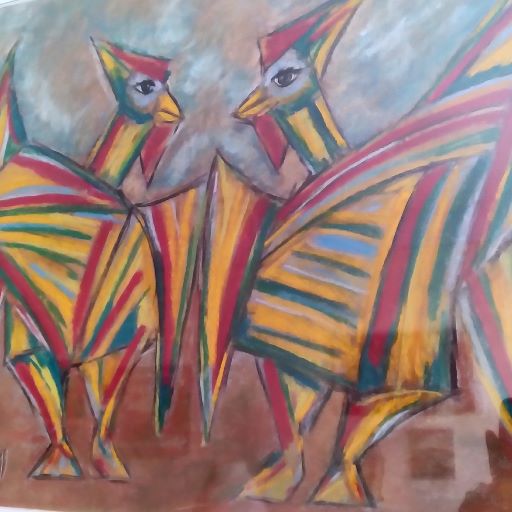
Give Your Hero Strength to Stand Up for Herself and Others. She refuses to be passive. She acts on what she believes to be right, no matter how much trouble and conflict she may encounter. Consider including a romantic interest to intensify that trouble and conflict. Remember – It Takes Two to Tangle Your Story.

Give Her a Romantic Partner Strong Enough and Good Enough to be Worthy of Her. A relationship of equals has huge potential for dramatic tension. Power, drama, and intensity ignite your story of tangled relationships. Go ahead. Set fire to the page.

Alice Orr – https://www.aliceorrbooks.com.

ASK ALICE Your Crucial Questions. What are you most eager to know – in your writing work and in your writer’s life? Email aliceorrbooks@gmail.com. Or add a comment question to this post.

Alice has published 16 novels, 3 novellas and a memoir so far. She wrote her nonfiction book No More Rejections: 50 Secrets to Writing a Manuscript that Sells as a gift to the writers’ community. Her latest novel – A Time of Fear & Loving Riverton Road Romantic Suspense Series Book 5 – is available HERE.
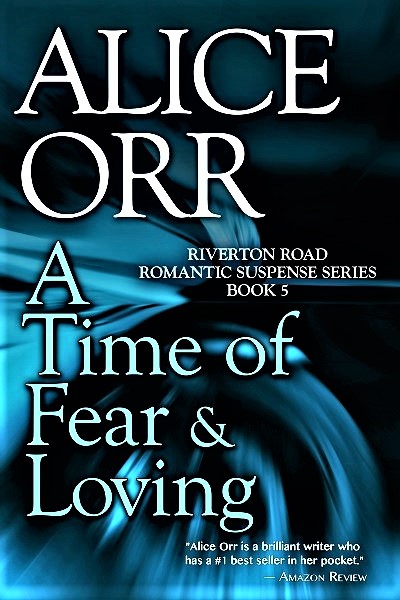
A Time of Fear & Loving

Praise for A Time of Fear & Loving: “Alice Orr is the queen of ramped-up stakes and page-turning suspense.” “Warning. Don’t read before bed. You won’t want to sleep.” “The tension in this novel is through the roof.” “I never want an Alice Orr book to end.” “The best one yet!”

Look for all of Alice’s books HERE.

https://www.facebook.com/aliceorrwriter
http://twitter.com/AliceOrrBooks/
http://goodreads.com/aliceorr/
http://pinterest.com/aliceorrwriter/


 

How Your Main Character Builds a Powerful Story

How Your Main Character Builds a Powerful Story. You want to write the best story you have in you. A story that has you on the edge of your seat while you write it and the reader on the edge of her seat when she reads it.

Character Motivation is Key. Motivation links your main character to your plot. What your character must do, and how intensely she is compelled to do that thing, will determine how gripping your story turns out to be. The character is driven by her motivation. Her actions create your story line. They are the fuse for the fireworks of your plot.

Your Character’s Drive to Act must be Powerful and Dramatic. Otherwise, your story will not be powerful and dramatic. Here’s how to find your way to storytelling power and drama. Take these five steps and you will be dancing the path to a page-turner story.

Step One. I have prepared a list of powerful character motivations. Motivations that can catapult your character and her story into the intensity stratosphere. Choose the motivation that will produce the most drama in your story’s situation by causing the most conflict for your character. Find that motivation list below.

Step Two. For a longer, more complex book, you might want your main character to have a secondary motivation as well. A slightly less driving force than her primary motivation, but compelling enough to create story lightning all the same. Which is How Your Main Character Builds a Powerful Story 

Step Three. Drape your author shoulders in your most grand and glorious imagination cape and brainstorm three possible examples of how exactly this primary motivation might  enter your character’s life with sufficient force to drive her passionately forward page after page. Choose the one that  conjures up maximum conflict and struggle for your character.

Step Four. Brainstorm three specific examples of how this motivation might come to life and be dramatized, as in acted out, in scenes starring your character. Scenes that will capture and command your reader’s attention with sharp dialogue and riveting action. Scenes potent enough to become  pivotal turning points in your story.

Step Five. Brainstorm the specific nature of the struggle, or more pointedly, the trouble that could befall your character in each of these pivotal scenes. Keep in mind that your goal as storyteller is to plunge your character into hot water, then turn the temperature up higher, higher, and higher still. That heat is what sets  pages turning rapidly for your reader.

The Mighty Seven Most Powerful Character Motivations.

#1 – LoveA powerful motivator that can drive a character to her best and worst behavior.

#2 – Self-Preservation – The threat of danger or death is another powerful motivator. Include the preservation others here. The impulse to save another person or persons from peril.

#3 – Self-Knowledge – Be careful about making this a primary motivation in commercial fiction. It can be a bit too subtle and inward for the popular marketplace to embrace with enthusiasm. Still, it may occur as a result of your character’s experiences in your story.

#4 – Pursuit of Adventure and Life Experience – Do not let this particular motivator make your protagonist behave recklessly unless we, as readers, can identify with and support that choice.

#5 – Honor or Duty – These motives can be difficult to make believable in many contemporary, realistic stories. But, if you are writing action-adventure or fantasy, feel free to go for it.

#6 – Greed – All motivations are not honorable or noble. This is one of those. For that reason, you might not want to choose it as fuel for your preferably admirable main character’s behavior.

#7 – Revenge – Another tricky choice. Powerful and believable for sure, but unattractive. Even a character intent upon avenging a wrongful death may be contemplating a heinous act of her own, and that is a touchy storytelling choice. Greed or Revenge work better as motivations for your villain, who must also be strongly driven.

Give your Hero Character Admirable Reasons for What she Does. A smart storytelling decision because, the nobler the motive, the more significant her struggle becomes. And, the more significant we believe your character’s struggle to be, the more we care about her and about your story. Which is How Your Main Character Builds a Powerful Story.

Alice Orr – https://www.aliceorrbooks.com.

ASK ALICE Your Crucial Questions. What are you most eager to know – in your writing work and in your writer’s life? Email aliceorrbooks@gmail.com. Or add a comment question to this post.

Alice has published 16 novels, 3 novellas and a memoir so far. She wrote her nonfiction book No More Rejections: 50 Secrets to Writing a Manuscript that Sells as a gift to the writers’ community. Her latest novel – A Time of Fear & Loving Riverton Road Romantic Suspense Series Book 5 – is available HERE.

A Time of Fear & Loving

Praise for A Time of Fear & Loving: “Alice Orr is the queen of ramped-up stakes and page-turning suspense.” “Warning. Don’t read before bed. You won’t want to sleep.” “The tension in this novel is through the roof.” “I never want an Alice Orr book to end.” “The best one yet!”

Look for all of Alice’s books HERE.

https://www.facebook.com/aliceorrwriter
http://twitter.com/AliceOrrBooks/
http://goodreads.com/aliceorr/
http://pinterest.com/aliceorrwriter/

 

Storytelling Mentor on Your Shoulder

Storytelling Mentor on Your Shoulder. Every writer I know has endured rejection. I certainly have. In fact, on the occasion of my first major rejection, the editor implied, or maybe told me straight out, that I had no idea what I was doing.

My first big mistake that day was agreeing to a sushi lunch. I didn’t know sushi from tsunami at the time, but I did know I should appear cooperative. So, I replied, “Sushi’s good.” Had I guessed the true purpose of the lunch, I would have made a different response. Unfortunately, I didn’t have a clue, though I probably should have.

I was writing my second novel for this editor. The first hadn’t set the world on fire.  The second was supposed to correct that, but the revision phase had dragged on so long I’d almost lost track of what my story was originally about. As I took a wobbly chopstick grip on my third portion of something raw and wet wrapped in seaweed, my editor let me know she felt the same.

“This just doesn’t work for us,” the editor said. If you have ever heard or read those words, you know what happened next. I plunged into shock. On the other hand, I was back on track in one respect. I got that the revision phase was finished. Novel number two was off the table, as surely as the sushi had slipped from between my chopsticks and plummeted to my plate.

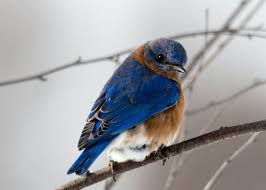
“You seem to think a bird sits on your shoulder and tells you how to write,” my editor was saying. “Like you don’t have anything to do with it.” I needed to be at the top of my mental game right then, but I was incapable of responding. Instead, I excused myself, dashed to the ladies’ room, and leaned my clammy forehead against the cool black tiles of the marble stall.

A Storytelling Mentor on Your Shoulder?  I had never been aware of anything, with or without feathers, telling me how to write a book. What I had always been aware of was my lack of power. Because of the way the publishing world works, I had no control over the destiny of my writing career. Now, I understood how perilous such a position can be.

If you have ever submitted a manuscript anywhere, you know what I mean. You labor over your work, send it out into what feels like a void. then wait for a thumbs up or down on your efforts, your ambitions, your hope. You endure this because you have no idea what else you can do. You are as clueless as I was in that ladies’ room with my forehead pressed against tile as black as I believed my future to be.

A few years later, I became an editor myself. That choice had a lot to do with power. I was determined to regain mine, and to pass it on. As an editor, then a literary agent and teacher, I would be that bird. I would sit on a writer’s shoulder and whisper in her ear the words she needed to hear to avoid her own demoralizing rejection scenes. I could do that because my years on the other side of the desk taught me a lot about how to create a marketable manuscript.

I have been sharing that knowledge ever since. Still, the dread words are out there. “This just doesn’t work for us.” Words that hit their mark hard for any writer. I wish I could guarantee they will never be heard again, but I can’t. What I can offer is my experience and expertise, and to be a bird with an empowering song you need to hear. A Storytelling Mentor on Your shoulder. Stay tuned to this blog. I have many more melodies to sing.

Meanwhile, ask your crucial questions. How does your attitude need to be adjusted? What fears do you face about your writing career? What do you most eagerly desire to know? Add a question comment to this post, or email me at aliceorrbooks@gmail.com. I will be honored to respond.

Alice Orr – www.aliceorrbooks.com

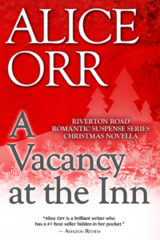
Alice Orr’s Christmas story A Vacancy at the InnRiverton Road Romantic Suspense Series Book 3 – is available on Amazon HERE. Enjoy!

Alice Orr A Vacancy at the Inn

Praise for A Vacancy at the Inn. “Grabbed me right away and swept me up in the lives of Bethany and Luke.” “Undercurrents of suspense move the story along at an irresistible pace.” “The Miller family is rife with personality quirks, an authentic touch that demonstrates Alice Orr’s skill as a writer.”

Look for all of Alice’s books HERE.

https://www.facebook.com/aliceorrwriter
http://twitter.com/AliceOrrBooks/
http://goodreads.com/aliceorr/
http://pinterest.com/aliceorrwriter/