Category Archives: Storytelling

Write It Right About Anger – Joy Writing with Alice Orr

Write It Right About Anger – Joy Writing with Alice Orr. Anger is a tricky topic for many people. Anger is a tricky emotion. Writing anger is tricky too. Sometimes damned if you do. Sometimes damned if you don’t. Let’s face off about anger.

When Mornings Start with Emotion. Some days I wake up feeling Anger. I may not remember exactly why. I do remember how it feels to carry that state of mind inside me and may want to erase it immediately. But there are other considerations to consider. Especially for a writer.

Ann Lamott on the Value of Anger. In Grace (Eventually) Ann Lamott says. “It’s fine to know but not to say that anger is good. A bad attitude is excellent and the medicinal powers of shouting and complaining cannot be underestimated.”

The Value of Anger for a Writer. Ann Lamott gets it right – especially the part about it not being fine to express anger. She encourages Writing About Anger. So do I. Not everyone agrees. Not everyone makes it comfortable for the rest of us to agree.

Why We Hide Our Anger. When we are hurting our natural anger is often squelched. Our emotional discomfort meets with disapproval from those around us. Their disapproval admonishes us for Expressing Anger – even in our writing.

The Pressure to Stay Positive. Injured individuals are told they must be upbeat and hopeful at all times. They are told they invite trouble and bad outcomes by allowing their anxiety to show. This kind of repression causes more Emotional Discomfort – including for the characters we create.

Permission to Feel is Legitimately Positive. We must let ourselves and others feel whatever we need to feel. Which sometimes includes a dose of being pissed off. Embracing all emotions is key to embracing emotional health and embodying a healthy brain.

Harness Your Disgruntled Energy. Sometimes an outburst of pissed off energy is exactly the fuel that is needed to get you and your characters through a prickly patch or a bad day. You are Coping with Anger in Difficult Times by putting it to productive use of your own time.

Joy Write. Write about a situation where anger gave you the energy or motivation to get through a difficult experience. What were you able to accomplish with the help of that anger energy?

The Virtues of Positivity are Endlessly Espoused. Cliches abound. Keep your sunny side up. Look for the silver lining. Whistle a happy tune. We all spout versions of them. In my Workshops for Writers I say “Attitude isn’t everything but it affects everything.” Less rainbow-tinted wording but still basically “sunny side” “silver lining” “happy tune.”

Positivity versus Authenticity. Attitude may affect everything. But what about when your smile is a lie? What about when you shine your smile because others like your face better that way? What about when you smile because you feel you have to? Write It Right About Anger – Joy Writing with Alice Orr.

Joy Write. Recall a time when you felt pressured to hide your anger or “keep your sunny side up.” How did that affect you? Did you comply or rebel. Tell the story.

The Challenge of Maintaining Cheerfulness. Anger can gain its own momentum and feed itself. Cheerfulness is harder. You wake up in a good mood that drifts away. You try to keep it going but the effort is too difficult to sustain. Sometimes we sulk however that may be received. We choose between Emotional Discomfort and Disapproval.

Joy Write. Write about a morning when you woke up angry for no clear reason. How did that feeling shape your day? What did you notice about yourself and your interactions with other people? How did they react to your disgruntled self?

Facing Life’s Challenges and Challengers. Somebody says “Let me be perfectly honest with you.” My advice? Head for the hills. I wager they have not brought welcome news. Do not stop running until you are a far distance from unwelcome unsolicited challenges. How properly polite we are to call such presumption a “challenge” in the first place.

Writing as Release. A compensating truth. We are writers. We let it all hang out on the page – including our journal pages. We tell our stories however angry or disgruntled or prickly they may be. We are Expressing Anger in Writing. We are Writing Truthfully about Emotions.

Joy Write. Consider how language shapes our experience. How words like “challenged” and “upset” dilute the true intensity of feeling angry. Write an emotional scene using vivid, technicolor language to recreate the anger your character feels.

A Truth about Our Current World. Life has become a slog for many folks for many reasons. Pretending otherwise disrespects all of us who Live with the Anger. We dance with the devil. We struggle to keep in step. Are you Letting Yourself Feel Anger?

Choose What to Do with Your Truth. Tell your Truth in Writing. Publish your truth tales. Or hide them behind a toilet bowl. Or save that choice for another day. Do not be angry with yourself for your anger. Do not forget that there is Hope After Anger.

The Shifting Circle of Support. Anger and Relationships. Some support may drift away. They may need to nurse their own anger. They may need to rest from anger fatigue. Others will remain stolidly in place. There is hope in that. There is strength in that.

Joy Write. Reflect on the people who have stayed with you through the tough, angry times in your life. Make a list of those people. Choose one and write the story of that person’s support and loyalty to you.

Find Hope in Your Honesty. No matter what – you are still here and you are still you. There is hope in that. There is triumph in that. Keep on Writing Your Truth whatever may occur. Write It Right About Anger – Joy Writing with Alice Orr.

FYI – More Writing Prompts and Exercises that Write It Right About Anger.

  1. List the physical sensations, thoughts and behaviors a person experiences when angry. Write a paragraph using these details in the behavior of a fictional character. Write a paragraph using these details for your own behavior in a memoir piece.
  2. Choose a cliché about positivity (e.g. look for the silver lining). Rewrite it from the perspective and attitude of someone who is experiencing a moment or a period of anger. How do the phrase and its meaning change?
  3. Write a conversation between two characters. One is angry. The other insists on remaining positive. Let the tension between them play out in their dialogue.
  4. Set a timer for ten minutes. Write nonstop about a time you felt that your anger was not allowed or was being dismissed as inappropriate or irrelevant. Do not edit or judge. Just let the words come and write them down.
  5. Write two sentences. In one sentence a character tries to suppress their anger. In the other sentence the same character openly expresses their anger. Compare and contrast the two sentences.
  6. Describe anger using metaphors and/or similes. A metaphor example – Anger is a storm brewing behind my eyes. A simile example – Anger is like a storm brewing behind my eyes. Let your imagination fly. Do not judge or edit. Just write.
  7. Write a letter you will never send to someone or something that made you angry at some time in your life. Let the feelings flow. Do not censor your emotions.
  8. Start a Writing Habit. Set aside ten minutes a day to write about whatever emotion is strongest for you at the time – anger or hope or anything in between.

Keep on Writing whatever may occur. Alice Orr https://www.aliceorrbooks.com and https://aliceorr.substack.com/p/write-it-right-about-anger 

Alice Orr. Teacher. Storyteller. Former Editor and Literary Agent. Author of 15 novels, 2 novellas, a memoir, and No More Rejections: 50 Secrets to Writing a Manuscript that Sells.

Joy Write with Alice. https:://www.aliceorrbooks.com.

Follow Alice on Substack https://aliceorr.substack.com/

Read Alice’s Novel. She writes it right about anger in A Time of Fear & Loving. Riverton Road Romantic Suspense Series Book 5. Available HERE.
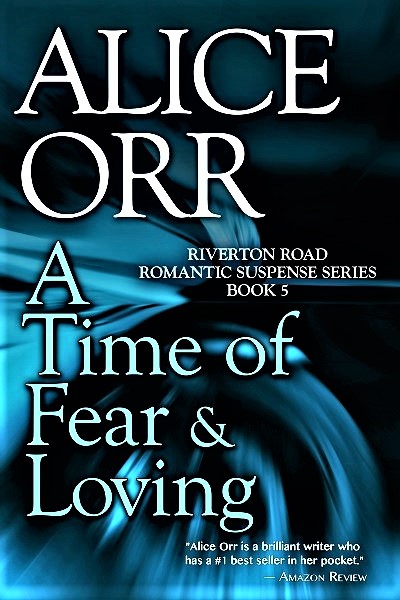
A Time of Fear & Loving

Praise for A Time of Fear & Loving. “Alice Orr is the queen of ramped-up stakes and page-turning suspense.” “Warning. Don’t read before bed. You won’t want to sleep.” “The tension in this novel is through the roof.” “I never want an Alice Orr book to end.” “Budding romance sizzles in the background until it ignites with passion.” “The best one yet!”

Experience Alice’s Suspense Novel Series. Riverton Road Romantic Suspense Series. Five intense stories of love and death and intrigue. Available HERE.
Praise for Riverton Road Romantic Suspense Series. “Romance and suspense at its best.” “I highly recommend this page-turner series.” “Twists and turns, strong characters, suspense and passionate love.” “The writing is exquisite.”

Ask Alice Your Crucial Questions. What are you most eager to know? About your writer experience. About telling your stories. Ask your question as a comment following this post.

http://facebook.com/aliceorrwriter/
http://twitter.com/AliceOrrBooks/

https://bsky.app/profile/aliceorr.bsky.social/
http://goodreads.com/aliceorr/
http://pinterest.com/aliceorrwriter/




Family Fuels Fiction – Joy Writing

Family Fuels Fiction – Joy Writing. Pat Conroy is one of my favorite storytellers. He said this. “One of the greatest gifts you can be given as a writer is to be born into an unhappy family.”

Let’s Modify That. One of the greatest gifts you can be given as a writer is to be born into a conflicted family with family secrets. In my experience that statement encompasses just about all of us.

My Family is Conflicted. Sometimes explosive. My family harbors secrets.  Your family is most likely conflicted too. Your family may harbor secrets. Do you have a family story – funny or dramatic or painful – that you have always wanted to write about?

Joy Writing Prompt. Write a scene where a long-held and protected family secret is revealed at a holiday gathering. How does each family member react? Whose version seems most true or untrue? Include compelling scene elements – action, dialogue, description, tension.

Conflict is the Essence of Strong Storytelling. I prefer to refer to Conflict as Struggle in this context. Struggle is the essence of strong storytelling. Ergo. Look homeward angels. Family is where the fodder is. This storytelling fodder is waiting for you to turn it into story magic.

Families Bristle with Serious Struggle. My family. Your family. Everybody’s family. Take a moment right now for this exercise. Make a list of the intense struggles you have heard about or witnessed or participated in from your family history. Each is a story throbbing to be told.

A Family Memory Patchwork. How do separate members piece that patchwork together? An incident occurs in your shared past. Am important incident. Maybe a traumatic one. The details sear your consciousness. You compare notes.

Memory Details may Differ.  Have you ever compared memories of a family event or incident with another person in your family? How did your recollections coincide? How did they differ?

Joy Writing Prompt. Select a family event – a wedding or funeral or birthday gathering. Describe the event from the point of view, and in the individual voices, of three different family members. How do their memories of the event compare and contrast?

Test This Premise Further. Grab your list of intense family struggles. Choose one. The more fraught and traumatic the better. List the family members involved in that struggle. Which do you think would agree with your recollection of the incident? Which do you suspect would disagree? Family Fuels Fiction – Joy Writing.

Discrepancies Can Be Benign. Like they usually were with my late brother Michael and me. We would tease each other and make jokes. But only with the not-so-touchy bits. Nostalgia rather than gut wrench. The dreaded stories we mostly did not mention.

Dreaded Stories are Danger Zones. We tiptoed around them like quicksand. One wrong step and we could be sucked down with no hope of rescue. Rescue from what? Rescue from the collision of my version of reality and his and from the powerful confrontation that might erupt between us as a result.

Joy Writing Prompt. Write a family story that no one wants to talk about. In your story, someone brings up this episode that has previously been silenced. What happens when this revelation occurs? What emotions and conflicts arise? Be specific and detailed.

Every Family has Dreaded Stories. Your personal list of family struggles is a catalog of danger zones in your history. Each struggle is a bed of quicksand. Each is a collision of points of view waiting to happen. Each is a potentially bloody battleground. All possess story power.

This is Fertile Ground for the Storyteller in You. Who in your family do you tiptoe around for fear of your colliding truths? What conflagrations have you barely survived when one of those toes slipped into the memory mine field? Which would make the most dramatic story? Which family member’s perspective would be most challenging for you to write?

Joy Writing Prompt. Two siblings remember a childhood incident very differently. Write a dialogue where they argue about what really happened in that incident. Reveal their emotions by way of their manner of speaking.

Family Fueled Storytelling is About Emotional Truth. You have your emotional truth. Other people have theirs. Each truth is valid for that person. Have you written stories about real people and events? How did you handle emotional truth – yours and theirs?

Intensify the Story You are Writing Now.  Hot emotions. Cold hearts. Hotter clashes. Colder calculators. You have encountered all of these somewhere in your life. Slide them into your story. Use them to bring your characters and your scenes to life on your pages.

This is Toxic Territory in Real Life. Tell these stories as fiction. Reimagine all of the physical details. Personal descriptions. Locations. Times and dates. Anything identifiable. Retain the emotions. They are where your intense, powerful, dramatic story material really resides

Joy Writing Prompt. Write an intense, powerful, dramatic scene where a family member leaves home under difficult circumstances. What is said? What is left unsaid? How, specifically, does the family cope with their absence?

Alice Orr Books Site Banner

Struggle Boils through My Own Stories. Through roiling Riverton, tempestuous families collide and conflict. How much of that has been inspired by real-life experience? Let me just say this. I agree with Pat Conroy about complicated families. I am grateful for the gift to my writer self. Family Fuels Fiction – Joy Writing.

FYI – More Family Fueled Writing Prompts and Exercises.

  1. Make a list of the most intense struggles and conflicts you have witnessed or experienced in your family. Choose one and write a brief summary of the event from your own perspective. Write a paragraph (or more) from the perspective of another involved family member (or more).
  2. Choose a family member you know well. Invent a fictional character inspired by them. Change name, appearance, and circumstances but keep their core emotional struggle.
  3. Write a conversation between two of your family members who are tiptoeing around a “danger zone” topic. Focus on subtext. What are they not saying? What emotions simmer beneath the surface?
  4. Write a short piece where each paragraph is a different member of your family’s recollection of the same event. Let the discrepancies and overlaps create tension and reveal character.
  5. Choose a strong emotion that you personally associate with a specific family memory – anger, joy, grief, jealousy, etc. Write a fictional scene that captures this strong emotion. Include characters who will best populate this scene and a setting that will best accomodate it.
  6. Create a lifelong creativity writing prompt or exercise of your own. Send it to me in the Comments section following this post. I cannot wait to read it, write it, share it.
  7. Create a family fueled writing prompt or exercise of your own. Send it to me in the Comments section following this post. I cannot wait to read it, write it, share it.

You possess storytelling magic. Keep on writing whatever may occur.  Alice Orr.  https://www.aliceorrbooks.com

Alice Orr. Teacher. Storyteller. Former Editor and Literary Agent. Author of 15 novels, 2 novellas, a memoir, and No More Rejections: 50 Secrets to Writing a Manuscript that Sells.

Visit Alice’s Joy Writing Blog. Whether you consider yourself a writer or not you have storytelling magic in you. Learn to shine in the light of that magic and make it your own at https://www.aliceorrbooks.com.

Follow Alice on Substack https://aliceorr.substack.com/

Alice’s Novel. A Time of Fear & Loving. Riverton Road Romantic Suspense Series Book 5. Experience Joy Reading. Available HERE.

A Time of Fear & Loving

Praise for A Time of Fear & Loving. “Alice Orr is the queen of ramped-up stakes and page-turning suspense.” “Warning. Don’t read before bed. You won’t want to sleep.” “The tension in this novel is through the roof.” “I never want an Alice Orr book to end.” “Budding romance sizzles in the background until it ignites with passion.” “The best one yet!”

Alice’s Suspense Novel Series. Riverton Road Romantic Suspense Series. Five intense stories of love and death and intrigue. Available HERE.

Praise for Riverton Road Romantic Suspense Series. “Romance and suspense at its best.” “I highly recommend this page-turner series.” “Twists and turns, strong characters, suspense and passionate love.” “The writing is exquisite.”

Ask Alice Your Crucial Questions. What are you most eager to know? About your writer experience. About telling your stories. Ask your question as a comment following this post.

http://facebook.com/aliceorrwriter/
http://twitter.com/AliceOrrBooks/

https://bsky.app/profile/aliceorr.bsky.social/
http://goodreads.com/aliceorr/
http://pinterest.com/aliceorrwriter/

Here’s Looking at Your Story Character

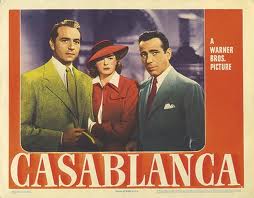
Here’s Looking at Your Story Character. Let’s Go to the Movies. I use films as storytelling examples more often than I use books. Because more of us have seen the same movies than have read the same books. Some movies have produced story character icons in our culture. Rick Blaine played by Humphrey Bogart in Casablanca is one of those icons.

Let’s Lay on Time Setting Drama from the Start. Casablanca came out in 1942. The world was immersed in the horrific drama of World War II. The film opening taps directly into that with a map of Europe and then Northern Africa running beneath the credits.

Let’s Lay on Place Setting Drama Too. Maps were very significant then. They played in theater news reels. They appeared in newspapers alongside stories of heart-stopping events. Battles. Troop movements. All in places that represented life and death to a 1942 audience.

Let’s Set the Stage for Your Dramatic Character. Rick has not yet so much as shown his face and we are already on the edge of our seats. A story’s opening has a lot of work to do. A hero character has a lot of weight to carry. How do you confront these challenges in your story?

Let’s Begin with Your Dramatic Opening. Picture your potential reader checking out the sample pages of your story online or scanning them in a bookstore aisle. You get one chance to make this first impression. You must not squander that chance. Here’s Looking at Your Story Character.

Let’s Plunge Your Hero into Trouble. Start with a situation where your hero feels as if their current world is being yanked out from under them. For Rick – Ilsa returns. She is the lover from the past who broke his heart. From this point on his life will never be the same again.

Let’s Make Your Hero Struggle. A struggle begins at your story’s opening. Something dramatic is already in progress. Casablanca uses Rick’s history for this. He must struggle against past hurt and present anger. Consider doing something like that in your story.

Let’s Create High Stakes for Your Hero. Something crucial is at stake for your character and for others too. Decisive action is desperately needed. Dire circumstances will result if your character fails to fulfill this desperate need. Rick must save a war hero from deathly peril.

Let’s Make Success a Long Shot for Your Hero. Obstacles to your characters purpose are already evident at the beginning of your story. Formidable obstacles. Powerful confrontations are inevitable. Rick is pitted against Nazis. Put your character in truly intense danger also.

Let’s Make Your Hero Decide to Act Anyway. Your character recognizes the danger and would prefer to avoid it. But somebody must do something. Nobody else steps up. Your hero makes a conscious decision to act. That decision sets your story in motion. Like Rick in Casablanca your hero must save the day – and they both will. Here’s Looking at Your Story Character.

AliceOrr. https://www.aliceorrbooks.com. Teacher. Storyteller. Former Editor and Literary Agent. Author of 15 novels, 2 novellas, a memoir, and No More Rejections: 50 Secrets to Writing a Manuscript that Sells. Blogging here for writers. “What A Character! How to Create Characters that Live and Breathe on the Page.”

Alice’s Memoir is titled Lifted to the Light: A Story of Struggle and Kindness. At the beating heart of this moving story a woman struggles. All her life, she has taken care of herself. Now she faces an adversary too formidable to battle alone. Available HERE.

Praise for Lifted to the Light: A Story of Struggle and Kindness: “I was lifted. I highly recommend this book as a can’t-put-down roadmap for anyone.” “Outstanding read. Very, very well written.” “Honest, funny, and consoling.” “Ms. Orr is a fine, sensitive author and woman. I have read other books by her and am glad didn’t miss this one.”

All of Alice’s Books are available HERE.

Ask Alice Your Crucial Questions. What are you most eager to know about how to discover the strongest story characters you have in you? Ask your questions in the Comments section at the end of this post. Alice will answer.

http://twitter.com/AliceOrrBooks/
http://goodreads.com/aliceorr/
http://pinterest.com/aliceorrwriter/
http://facebook.com/aliceorrwriter/